Why warehouse fires in the region are different, why the authority's finding is not always the final word, and what the evidence has to carry when several tenants share one roof.
By Mamoon Alyah, Managing Director and Principal Engineer, and Dr Amir Pourghorban, Senior Engineering Consultant and Head of Scientific Research, CEERISK Consulting.
Adapted from our Emerging Trends Webinar, Investigation of Warehouse Fires in the Middle East.
Presented by:
 |  | |||
|---|---|---|---|---|
Mamoon Alyah | Dr Amir Pourghorban |
Warehouse fire investigation follows broadly the same discipline wherever it is carried out. The guidance, the best practice and the underlying science translate. What does not translate is the operating environment: the way buildings are used, the way authorities investigate, the way scenes are preserved, and the commercial structure sitting behind the building.
This article sets out what we have found across warehouse fire investigations in Qatar, Bahrain, the UAE, Saudi Arabia, Jordan, Egypt and elsewhere in the region: what makes these fires more likely, what makes them harder to investigate, and what a defensible finding has to look like.
Case study: Fire in a shared hangar
The first case concerned a hangar-style building subdivided into five units beneath a shared roof structure. Each unit had a different tenant, and each tenant was separately insured.
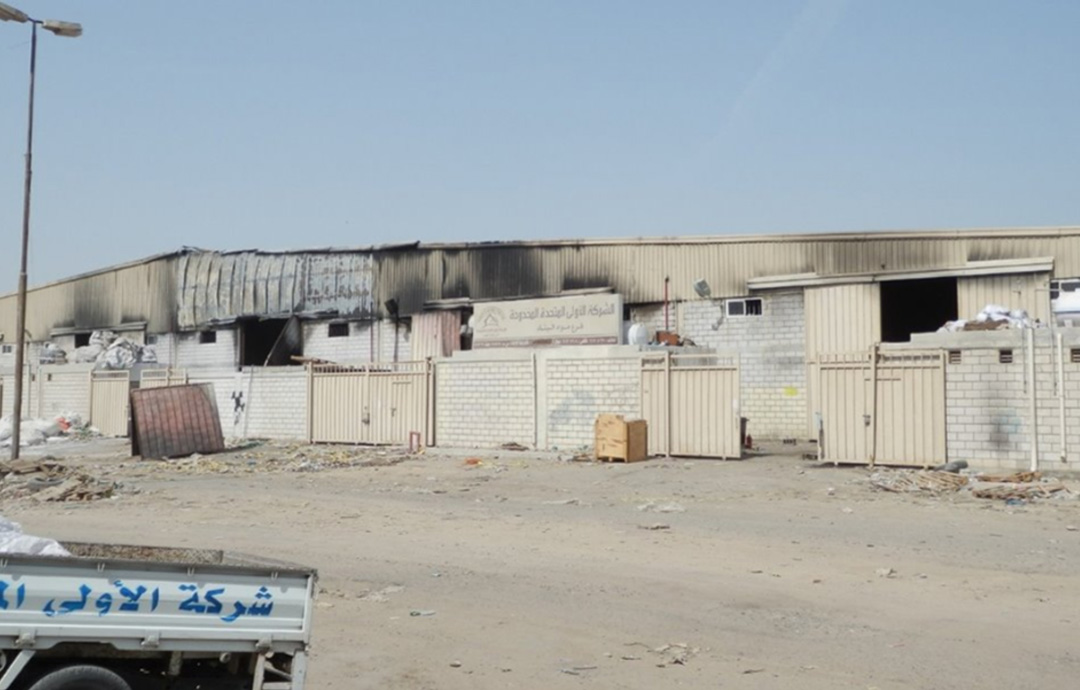
The occupancies were mixed. Unit 1 held general building materials of the kind sold through a DIY retailer, boxed and shelved, with a mezzanine level. Unit 2 held building materials of a bulkier type. Unit 3 held raw plastic pellets in bales of one to two tonnes each, stacked and awaiting sale to injection moulding operations. Unit 4 was empty. Unit 5 held further building materials.
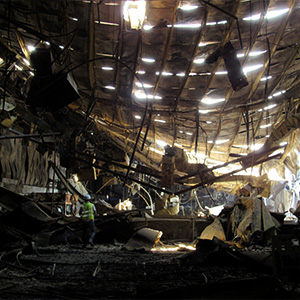
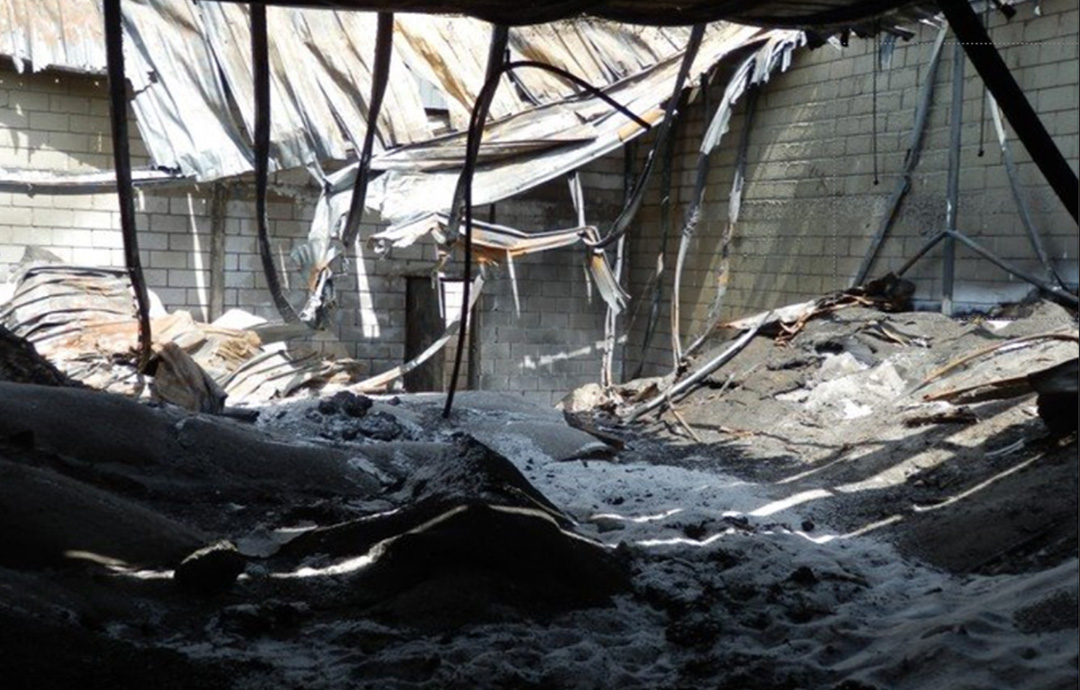
When we attended, the position on the ground was clear: the heaviest damage was in Unit 3. The roof there had gone entirely, the sheet metal had burned through, and the joists and posts had deformed and collapsed. Unit 2 had also sustained considerable damage, concentrated in a back corner where the mezzanine had come down and the ceiling had deformed heavily.
What the civil defence concluded, and why
The civil defence carried out a complete scene examination, interviewed the night watchmen and other witnesses who had attended, and concluded that the fire was accidental and had originated in Unit 2, inside a ventilation fan.
The reasoning was coherent. A ventilation fan in the back corner had failed earlier the same day, an attempted repair had been unsuccessful, a part had to be bought, and the job had been deferred. The fire followed that evening. The far greater damage in Unit 3 was contributed to its fuel load. Once tonnes of plastic pellets are alight, the released thermal energy is more that capable of destroying the roof, regardless of where the fire began.
Across the region, and equally in the UK and the United States, the primary question for the fire service is whether a fire was accidental or intentional. If there were no injuries and no suspicion of a deliberate act, the matter is property only, and the authority will record an accidental cause and, at most, identify a suspected heat source. Determining a specific failure mechanism is not their remit.
In this case, five units meant five individual tenants, and five separate policies. An origin in Unit 2 meant every other party in the building had a recovery action against the occupier of Unit 2.
Liability, in other words, turned entirely on which side of a boundary wall the fire had started. The insurers and loss adjusters were not satisfied with the civil defence’s conclusion, and we were instructed to establish the origin on the physical evidence.
What the evidence showed
Working through the scene in detail produced a different answer.
The fan showed no electrical involvement. We recovered the remains of the ventilation fan and examined them. The damage was thermal throughout, with no indication of an electrical fault or electrical arcing damage.
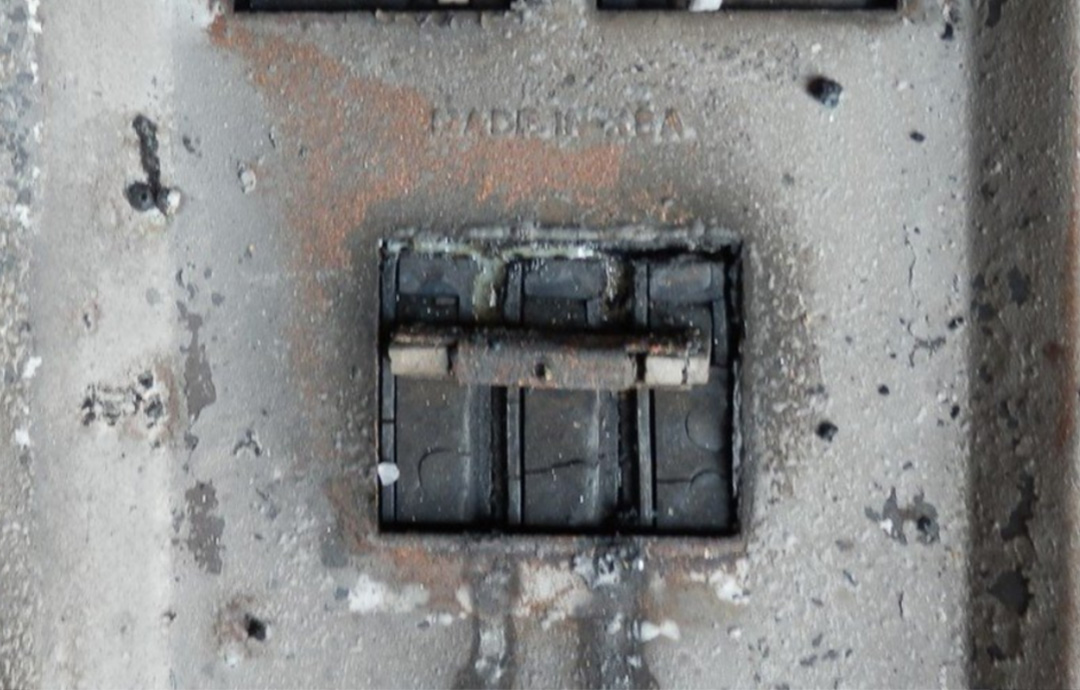 The circuit was dead. The storekeeper for Unit 2 was adamant that he had switched everything off before leaving. The thermal damaged circuit breakers of the unit were found in off position which confirm the storekeeper’s account. Whatever condition the fan was in, it had no power supply at the time of the fire.
The patterns ran the wrong way. Around the opening where the fan had been mounted, the heat patterns led away from the fan position rather than radiating from it.
Unit 3 showed heat generated within. The plastic pellets had burned and fused into a solid crust, in a distribution consistent with a fire developing within the unit rather than heat arriving from next door. The electrical supply in Unit 3 had not been isolated, and the recovered light fittings were damaged in a manner consistent with having been energised at the time.
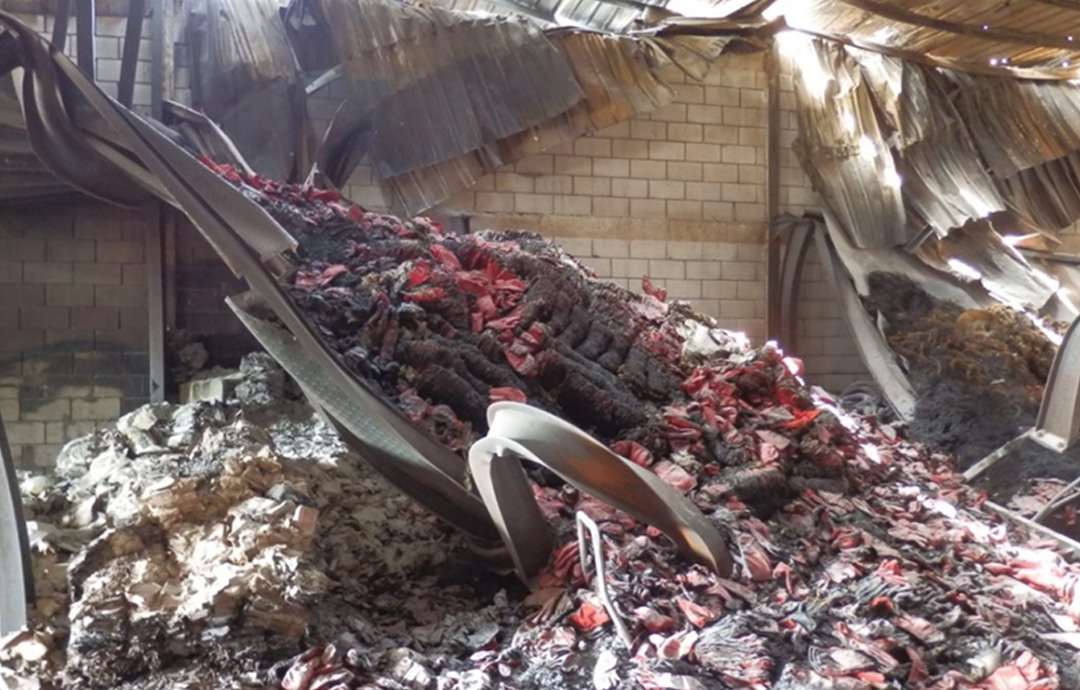 The sequence that fitted the evidence was that the fire originated in Unit 3, most probably at a light fitting; that the fuel load then drove it to spread to the roof; and that it spread from there into Units 2 and 4. In Unit 2 it took hold in the wall and ceiling insulation, then in the packaging material stored on and beneath the mezzanine, which is what produced the collapse the civil defence had read as the seat of the fire.
The report changed the official finding
We were told at the time that the finding would stand regardless. The assumption on site was that once the civil defence has issued its report, it will not be revisited.
We did not accept that. We produced a report that went through the evidence item by item, set out what had been identified, what had not been examined and why, and explained the mechanism in terms that could be followed without specialist knowledge. The loss adjuster took it to the civil defence.
They called the following day. They accepted that evidence had been identified which they had not examined, and they revised their findings and issued a further report placing the origin where we had placed it, in unit 3.
This does not mean that authorities are routinely wrong. Their original conclusion was reasonable on what they had examined, and their remit had been satisfied.
What makes warehouse risk in the Middle East different
Several regional characteristics recur often enough to be treated as structural rather than incidental.
Ambient conditions. Internal temperatures in a metal-roofed warehouse under sustained sun can reach around 45°C. The environment is arid and frequently windy.
Large uncompartmented volumes. The commercial logic is to use as much of the plot as possible, which produces very large open spans..
Partitions that are not fire-rated. Where subdivision exists, it is often a masonry wall erected for security or tenancy separation rather than a compartment wall designed and built to resist fire.
Mixed tenancy. Multiple tenants under one roof, as in the case above, changes both the risk and the way liability is apportioned afterwards. It also can introduce occupancies that the building was never designed for.
Undeclared change of use. Spare space gets repurposed. We see units used for assembly, and we see welding, cutting and grinding introduced into buildings intended purely for storage. That is a change to the risk profile of the building, and where it has not been disclosed it becomes a contractual question as well as a fire one.
Water availability. Access to sufficient water within the time available is a real constraint in many locations, and it shapes what suppression can achieve.
Fuel load and stacking. Stacking rules and separation distances are frequently not maintained.
Waste burning and external embers. Burning waste on or near a site is common practice in some areas. In dry, windy conditions embers travel, and they can smoulder in combustible material for a considerable period before flaming combustion appears.
Codes and compliance variation. The UAE, Saudi Arabia, Jordan and others each maintain their own regulations, many of them derived from European or American standards. The presence of a code is rarely the issue. Whether it is being followed in the building as operated is.
The process that brings the elements together
The fire triangle is familiar to the point of being taken for granted, and that is where it misleads. Heat, fuel and an oxidiser in the same space do not produce a fire. What matters is the chain reaction: whether the heat source is competent to raise that fuel to its ignition temperature, and whether the fuel is arranged so that combustion can then sustain itself once the original heat source is removed.
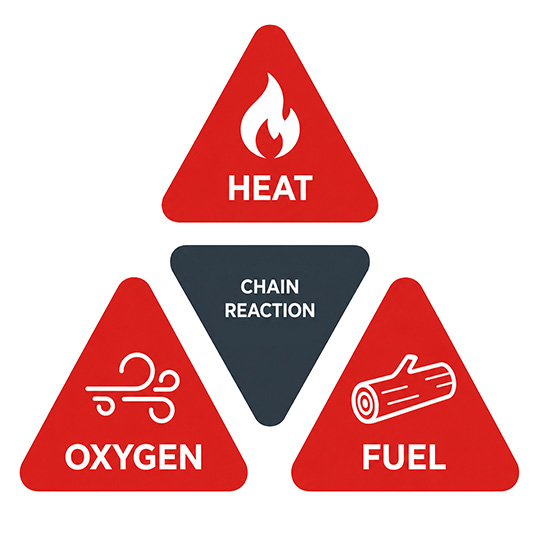
The corollary matters for investigation. A fire in a warehouse very rarely begins with something external. In almost every case there has been a failure, a human factor, or a combination of the two inside the warehouses:
A failure + a human factor = ignition.
That framing directs the investigation towards what brought the elements together, rather than stopping at what could burn and what could get hot.
Ignition sources in warehouses that we repeatably encounter
- Hot work. Welding, cutting and grinding carried out in a building where nobody planned for it. Anticipated on a construction site or in a workshop; not in a storage unit.
- Electrical faults and light fittings. High-intensity discharge (HID) lamps are common in the region's warehouses and are frequently relamped without the protective cover being refitted. If the lamp then fails and explodes, incandescent fragments fall directly onto whatever is stored beneath.
- Oils and fats. Seed and vegetable oils, once at ignition temperature, will generally burn until the fuel is consumed.
- External embers. As above: burning waste, wind, and combustible material that smoulders before it flames.
- Spontaneous heating. In our experience a lower-probability mechanism than it is credited with, but it has to be eliminated rather than dismissed.
- Deliberate ignition. Always considered, not least because it determines whether the authority retains the matter or refers it to the police.
Why these investigations are harder
The technical difficulty is only part of it. The greater challenges are practical. These include:
Total burn. By the time the fire is out, the building has been consumed. Property owners sometimes read this as a failure by the fire service. Fire services in the region, in the UK and in the United States apply the same priority: life safety first, and no unacceptable risk to crews. Where a building is unoccupied, where hazardous materials or processes are present, or where the fire is beyond control, the strategy will be to contain spread rather than to enter and extinguish. That decision is correct, and it also means the evidence base is thinner when we arrive.
Scene disturbance. Some of it is unavoidable, imposed for safety after a roof collapse. Some of it is not. Scrap steel is removed, salvageable material is picked over, and the scene degrades. Our standing advice to clients is to appoint a watchman immediately: partly to preserve the evidence, and equally to keep people out of a dangerous environment without protective equipment.
Chain of custody. Items are sometimes lifted from a scene without any record of where they were found or in what condition. Where the origin of an artefact cannot be evidenced, its value in a dispute falls away. This discipline is less consistently applied in parts of the region than it needs to be.
Environmental and hazardous material controls. Practice varies widely. In one Saudi case, the environmental authority stationed a representative on site and refused to release the scene until chemical testing was complete and all chemicals were accounted for. Elsewhere the controls are looser, which is a hazard to the investigation team as much as a constraint on it.
Documentation. Safety data sheets for stored chemicals, electrical schematics, maintenance records are often unavailable.
Witnesses and language. Warehouse workforces in the region are highly diverse, and it is common for several languages to be spoken across one site. Securing an interpreter who can handle technical questions accurately, rather than approximately, is a constraint on witness evidence.
Standards: what applies in the region
NFPA 921, the Guide for Fire and Explosion Investigations, is the reference point worldwide. Two important points regarding NFPA 921:
First, it is guidance rather than a standard. Second, it was written for the United States and refers throughout to US law, US courts and US legal precedent. Those passages do not transfer. The UK Association of Fire Investigators addressed exactly this by publishing its own consulted protocol, which does not contradict NFPA 921 but reduces it to what is applicable within UK law.
Many Middle East jurisdictions have adopted NFPA standards for the design, installation and maintenance of fire protection and detection systems, generally with additional local requirements. Those local additions are frequently more demanding than the source document, precisely because the authorities recognise the operating conditions described above.
Case study: the warranty question behind a destroyed warehouse
The second case is one we have discussed before, and we return to it because it demonstrates something the first does not: that the origin and cause can be settled and the decisive question can still be unanswered.
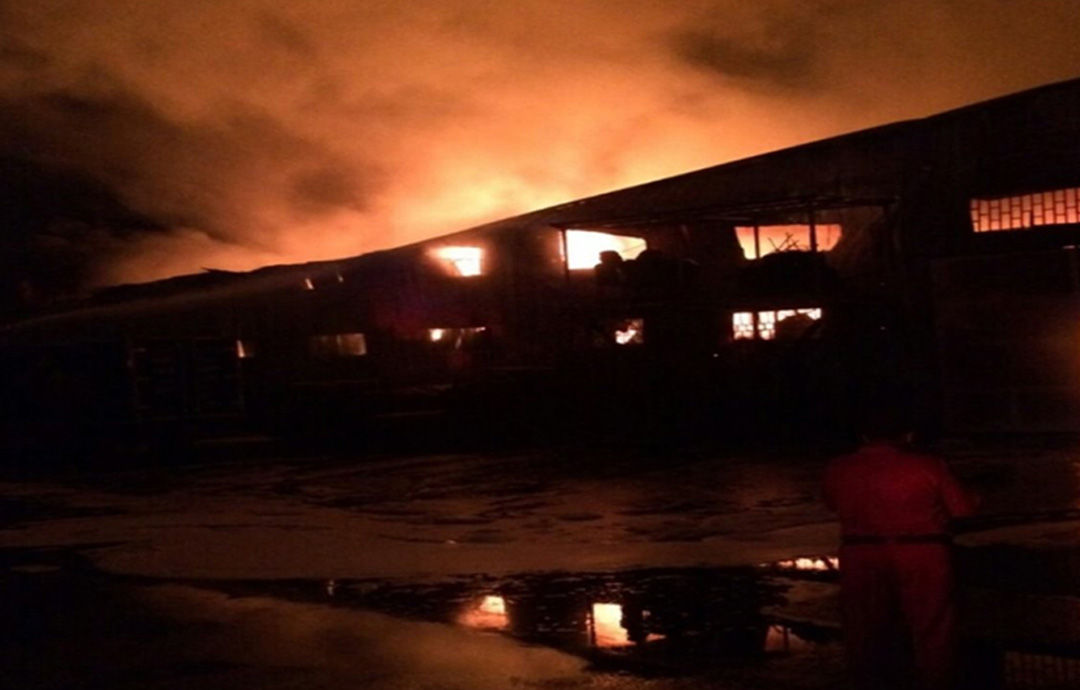
The property was a distribution complex of approximately 40,000 m², divided among eight tenants under eight separate policies, holding food products including edible oils and operating cold storage. It sat adjacent to a power station with substantial fuel storage tanks.
When the fire occured, the fire service positioned its appliances between the burning warehouse and the fuel tanks. That was the correct decision, and it meant the warehouse was not directly defended. Some tenants took the view that their units should have been protected. In our opinion the fire service was right: the alternative outcome was catastrophic. The building burned and collapsed, and crews returned for roughly two weeks to suppress repeated reignitions, which is characteristic of edible oils in an open, collapsed structure.
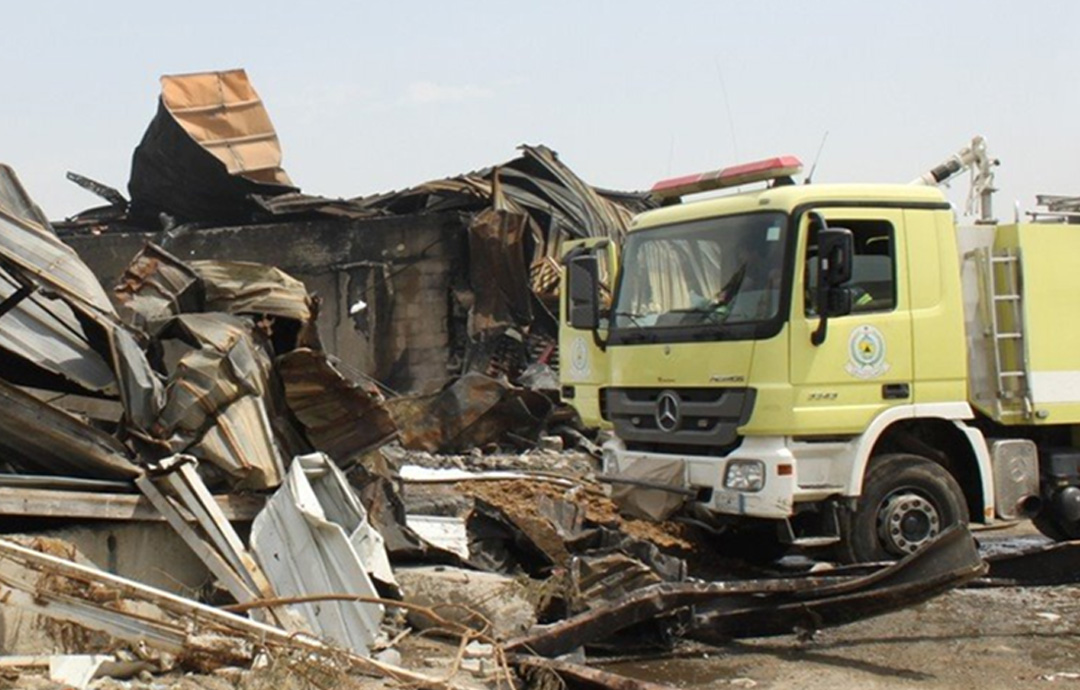
Following the incident a single unit remained standing, because it had a low fuel load and only the ceiling insulation burned. Within it stood a cooler used for chocolate and other temperature-sensitive products, and the failure was in the electrical wiring serving that cooler.
The warranty question. The building was sprinklered. If the fire began in a sprinklered area, why was it not controlled?
The sprinklers had operated, briefly and locally, and had not delivered enough water to have any effect. Working back through the system:
- The pumps were sound. The civil defence had tested and certified them only weeks before.
- The pipework damage occurred during the collapse. Severed welded joints and broken risers were found. On examination, these had failed when the building collapsed and pulled the pipework apart. Recording them as the reason the system failed would have been incorrect.
- The tank was not full. It was connected to the municipal supply through a float valve, and the float had failed, so it was not refilling automatically.
- The tank had been drawn down. An external pipe had been installed into the tank. The night watchman was running an informal car-washing business and taking his water from it. He had no idea the refill mechanism had failed.
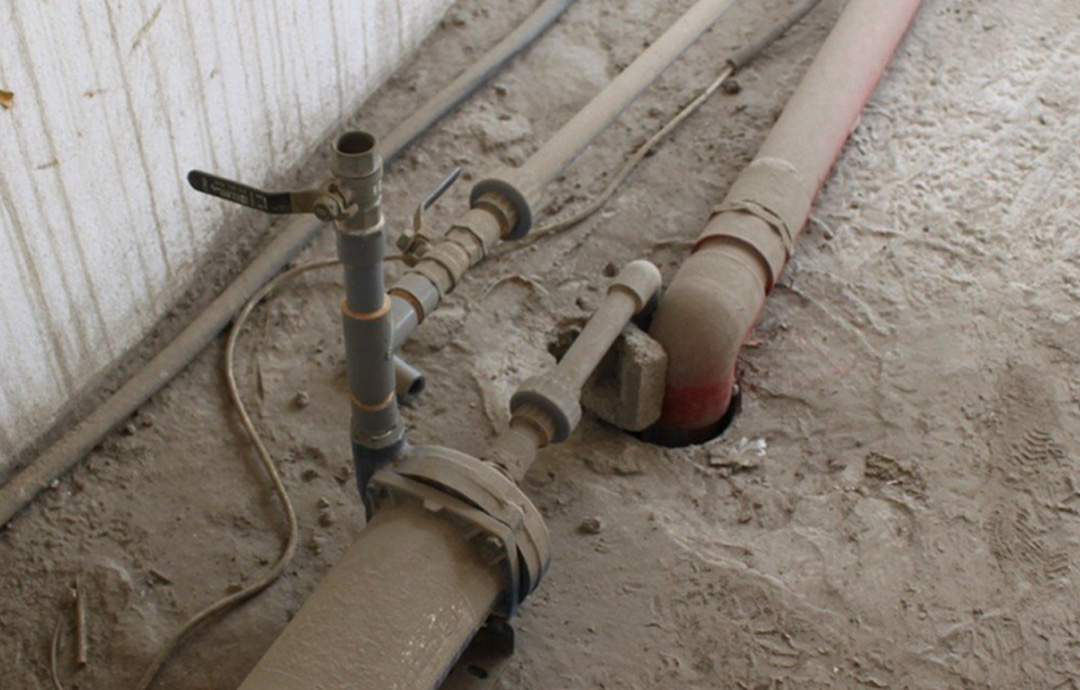
An otherwise compliant system, correctly specified, tested and certified, was defeated by a failed float and an undisclosed modification made for reasons entirely unconnected with fire. This is the type of finding on which warranties, exclusions and recovery turn, and it existed in no single document and no single burn pattern.
It also illustrates the limits of a compliance test. Testing confirms that the pumps start and a hydrant flows. It does not confirm that the system will deliver design flow for the design duration on the day it is needed.
How a warehouse fire investigation is conducted
Every investigation follows the systematic approach set out in NFPA 921, and an investigator must be able to demonstrate that they followed it rather than arriving at a conclusion by other means: define the problem, collect and analyse the data, establish the area and then the point of origin, determine the cause by identifying the heat source, the first fuel ignited and the process that brought them together, then form, test and report the opinion. Every lead followed, and every lead accounted for.
Several practical conditions determine whether that can be done.
Instruct early. This is the single most useful thing a client can do. Evidence degrades, scenes are cleared, and witnesses disperse.
Access. Frequently constrained by collapse. Clearing a roof safely, cutting steel and excavating to reach the suspected area of origin is often a precondition of the substantive work.
Evidence handling. Identified, secured, tagged, documented and examined under a chain of custody.
Collaboration with the authorities. There is a widespread assumption that the civil defence, fire service or police will not engage. That has not been our experience. Across several countries we have been able to speak with investigators and obtain a good deal of information, provided the right questions are asked and the limits on what they can release are respected. The value of that engagement is that it avoids two parallel investigations reaching two conclusions that then have to be reconciled.
Fire protection and warranty issues belong in every investigation. Closed valves, detection lost to dust and heat, systems isolated and not restored. In a recent warehouse investigation, the building relied on battery-operated smoke detectors. Security staff replaced the batteries only when a unit began chirping, and nobody was inside the warehouse to hear it. The fire had to spread out of the building and reach a detector elsewhere before anyone was alerted.
Severity of damage indicates the fuel load. It is the point the first case study makes, and it is worth stating plainly. The most heavily damaged area shows where the fuel sat. The origin has to be established on the patterns and the physical evidence.
Regional practice differs. Each jurisdiction has its own rules, its own investigating authority and its own conventions. Knowing them is part of the work.
What this means in practice
For instructing solicitors and in-house counsel, for industrial and corporate risk owners, and for the insurers, brokers and loss adjusters who instruct us, three points carry most of the practical weight.
The official finding is not necessarily the final finding. It answers the question the authority was asked, which is usually whether the fire was accidental. Where the evidence supports a different origin, and where it is presented clearly and completely, revision is achievable.
In multi-tenant buildings, origin decides liability. Where several occupiers sit under one roof, the boundary the fire started on determines the direction of every recovery action in the building.
The decisive detail is usually small. A failed float. A relamped fitting missing its cover. A circuit that was switched off. Identifying it, and being able to support the conclusion under scrutiny if the matter is disputed, is what a thorough forensic investigation provides.
That work spans CEERISK's services: expert and expert-witness services where the matter is disputed, forensic engineering to investigate the incident, risk management to assess fire protection, occupancy and fuel load beforehand, and data sciences to support the analysis.
Related sessions: Investigating Warehouse and Industrial Fires and Fire Risk on Construction Sites.
Working on a warehouse fire incident in the Middle East?
If you would like to discuss how the approaches set out here might apply to a current matter, we would be glad to talk it through.