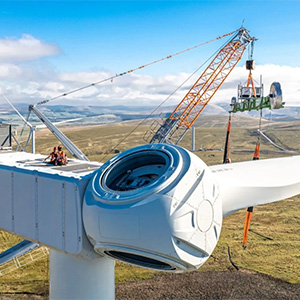
CEERISK was instructed by legal counsel to provide independent forensic engineering analysis and expert witness testimony in a multi-party dispute arising from the installation of four wind turbine generators on a large-scale renewable energy project.
Engagement at a Glance
| Sector | Renewable Energy – Onshore Wind |
| Dispute Type | Construction and installation dispute |
| CEERISK Role | Independent expert witness, instructed by legal counsel |
| Services | Technical review, forensic engineering analysis, expert witness report |
| Forum | International arbitration |
| Key Issues | Site readiness delays, mechanical incidents during turbine erection, crane operations, new-generation turbine assessment |
| Methodology | Root cause analysis, timeline reconstruction, failure mode assessment, standards benchmarking |
Download this Case Study
Keep this case study to hand. Download a single-page summary for your files.
The Dispute
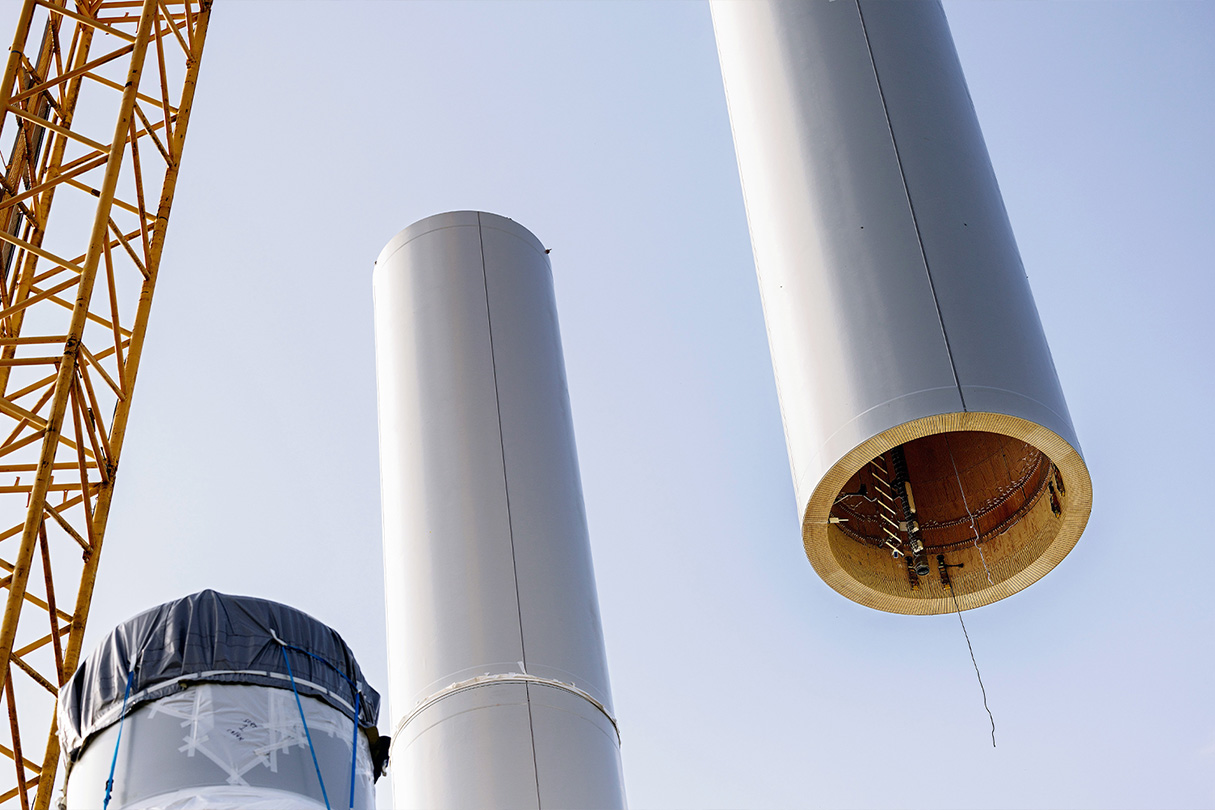 A renewable energy developer engaged multiple contractors to deliver the civil works, turbine installation, and commissioning for a wind farm comprising four new-generation turbine generators. During the installation phase, a series of mechanical incidents occurred, the project fell behind schedule, and disagreements over contractor performance escalated into a formal multi-party dispute.
At the centre of the dispute were three interrelated questions. First, whether the mechanical incidents reflected systemic failings on the part of the installation contractor. Second, whether the decision to deploy a newer, larger turbine model introduced unforeseen complexity that contributed to the problems encountered. And third, how responsibility for the accumulated project delays should be apportioned among the parties.
Legal counsel instructed CEERISK as an independent expert witness to provide a technically grounded, impartial assessment of these questions for use in arbitration proceedings.
Scope of Appointment
CEERISK was appointed to conduct a comprehensive technical review of the entire installation, commissioning, and testing sequence for all four turbines. This included evaluating whether the observed delays and mechanical failures were consistent with accepted industry practice, assessing the validity of the technical criticisms raised by each party, and preparing an independent expert opinion suitable for formal arbitration proceedings.
The evidence base was extensive. CEERISK reviewed engineering drawings, daily site progress reports, the manufacturer’s installation manuals, incident investigation records, road and access survey documentation, and both photographic and satellite imagery captured throughout the project.
Key Technical Issues Examined
Site Readiness and Schedule Misalignment
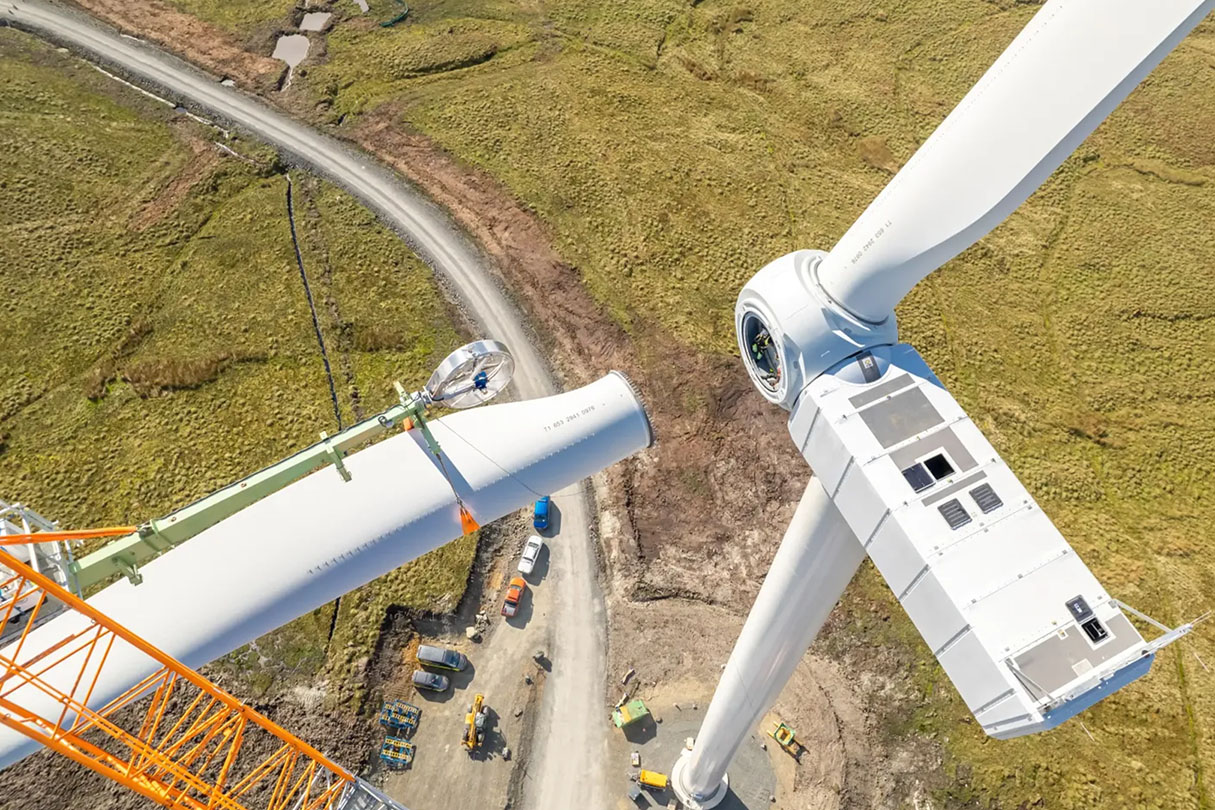 CEERISK’s timeline reconstruction, supported by satellite imagery and contemporaneous progress reporting, established that access roads and foundation pads were not fully completed at the point the installation contractor mobilised to site. This misalignment between the civil and mechanical works programmes was significant. It meant that the installation contractor was unable to work to the originally planned sequence, and the resulting disruption cascaded through the project schedule, affecting downstream activities across all four turbine positions.
New-Generation Turbine Model
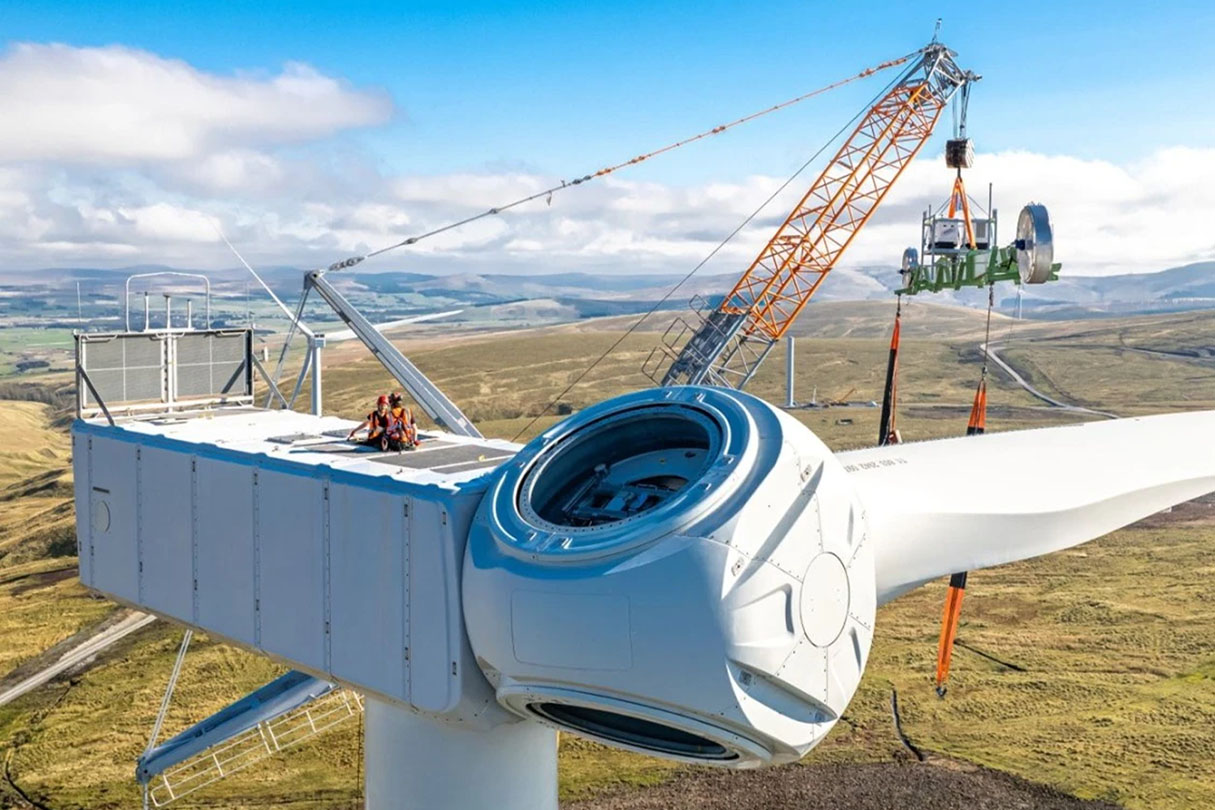
The turbines deployed on this project represented a step change in physical scale, with a significantly larger rotor diameter and blade length than the previous-generation platform. One of the central allegations in the dispute was that this transition introduced additional installation complexity that the contractor was not equipped to manage.
CEERISK evaluated the lifting methodologies, crane specifications, manufacturer installation manuals, and the procedural differences between the two turbine platforms. The assessment concluded that while the newer turbines were physically larger and more technologically advanced, the installation procedures themselves were not materially more complex. Experienced supervisory personnel from the turbine manufacturer were present on site throughout the installation campaign, providing technical oversight at each critical stage.
Mechanical Incidents During Installation
Three significant mechanical incidents occurred during the installation phase, each of which became a point of contention between the parties. CEERISK conducted a forensic engineering assessment of all three.
The first involved tower oscillation during erection. Wind conditions on the day exceeded the values that had been forecast, and the tower midsection entered its critical wind-speed range, triggering vortex-induced oscillation. CEERISK’s analysis determined that this phenomenon is a recognised risk in wind turbine erection and is not specific to any particular turbine model or generation. The contractor’s response to the event was consistent with standard practice.
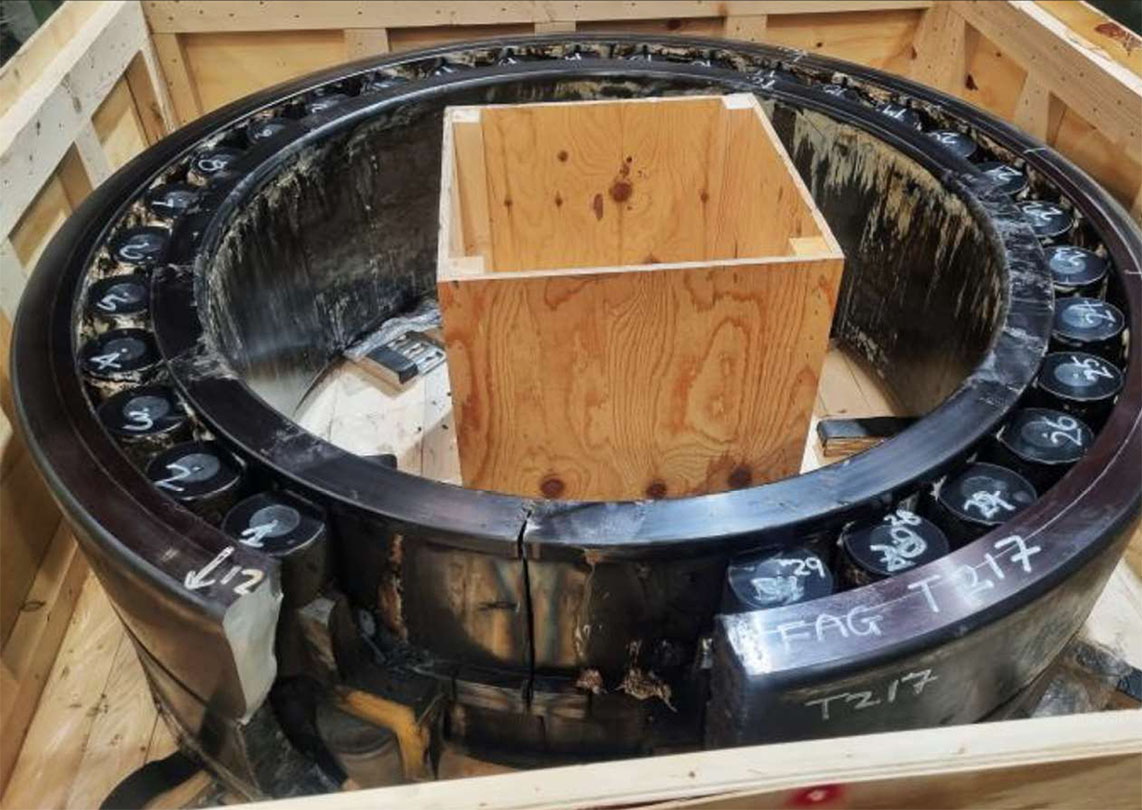 The second incident was a crack identified in the main bearing housing. CEERISK’s investigation traced the root cause to incorrect operation of the turning gear, a human error rather than any design or manufacturing deficiency in the turbine itself. This conclusion was consistent with the contractor’s own root cause analysis report, which CEERISK reviewed as part of the evidence base.
The third incident involved an interaction between the main crane cable and an installed blade during a period of high winds. Safety constraints at the time prevented the crew from repositioning the nacelle or lowering the crane boom. CEERISK concluded that this type of event could occur under equivalent wind conditions regardless of the turbine model being installed, and that the contractor’s decision to stand down operations was appropriate.
Crane Selection and Configuration
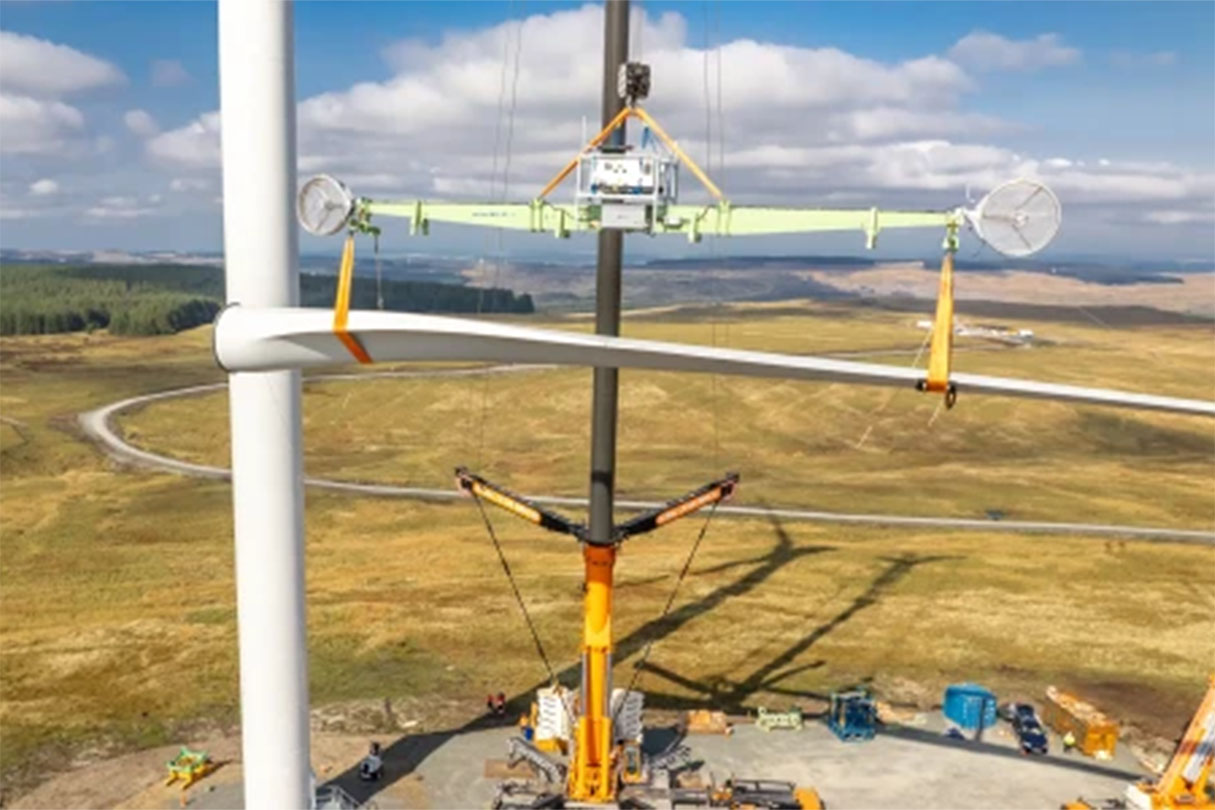 CEERISK also examined the records relating to crane selection, auxiliary crane deployment, and modifications to boom configuration that were made during the project. The project utilised a primary heavy-lift crane supported by several auxiliary units, with an additional main crane mobilised at certain stages.
The review found that crane-related delays were not attributable solely to the contractor’s equipment selection decisions. Rather, they arose from a combination of factors including evolving site conditions, weather constraints that restricted lifting windows, and safety requirements that necessitated configuration changes. In CEERISK’s opinion, the crane management approach was broadly consistent with what would be expected on a project of this scale and complexity.
Need to share this case study with your team? Download the one-page summary. [Download PDF]
How CEERISK Approached the Investigation
CEERISK applied a structured forensic engineering methodology throughout. Each mechanical incident was analysed individually to isolate the root cause and identify the failure mechanism involved. A detailed timeline was reconstructed from daily progress reports, photographic records, and satellite imagery, allowing CEERISK to map the sequence of events against the planned programme and identify where and why deviations occurred.
A failure mode and effects assessment was used to determine whether the incidents represented systemic issues with the contractor’s approach or were better characterised as isolated events arising from specific circumstances. Contractor performance was benchmarked against international wind turbine installation standards and what CEERISK considers accepted industry practice, drawing on over three decades of engineering investigation experience.
All findings were documented in a structured expert report prepared in accordance with the procedural requirements for expert witness testimony in international arbitration.
Expert Opinion
 CEERISK’s independent analysis concluded that the incidents observed during the installation phase did not indicate systemic incompetence on the part of the installation contractor. Rather, they arose from a combination of isolated human errors and unpredictable environmental conditions, factors that are inherent to complex wind turbine construction projects.
The transition to the newer, larger turbine model did not, in CEERISK’s opinion, materially increase the probability of the incidents that occurred. A significant proportion of the project delays originated from site readiness issues and adverse weather, both of which affected the civil and installation contractors alike. Notably, despite the challenges encountered, the installation contractor managed to conduct activities in parallel across all four turbine positions, which CEERISK regarded as evidence of effective resource management under difficult circumstances.
Value Delivered to the Legal Team
CEERISK’s involvement gave the instructing legal team an objective technical foundation on which to build their case. Rather than relying on the competing technical narratives presented by the disputing parties, the legal team was able to work from independently verified root cause analysis and a clear assessment of what constituted reasonable contractor performance in the circumstances.
The expert report translated complex engineering issues (turbine erection dynamics, crane load management, vortex-induced oscillation, failure mode analysis) into structured, accessible language that could be presented to the arbitration tribunal without loss of technical rigour.
By grounding the dispute in forensic evidence and international engineering standards, CEERISK ensured that the technical questions at the heart of the case were resolved on the basis of fact rather than assumption.
Related CEERISK Services
This engagement drew on CEERISK’s expert witness and forensic engineering capabilities. CEERISK regularly provides expert witness testimony for arbitration and litigation proceedings, forensic investigation and root cause analysis of engineering failures, technical review of construction and installation disputes across the energy and infrastructure sectors, and independent assessment of contractor and operator performance against applicable codes, standards, and accepted industry practice.
Instructing an Expert for a Renewable Energy Dispute?
CEERISK provides independent forensic engineering analysis and expert witness services across the energy, construction, and infrastructure sectors. If you require technically rigorous expert support for arbitration, litigation, or mediation, we welcome a confidential discussion.