A technical guide grounded in published scientific literature and international standards.
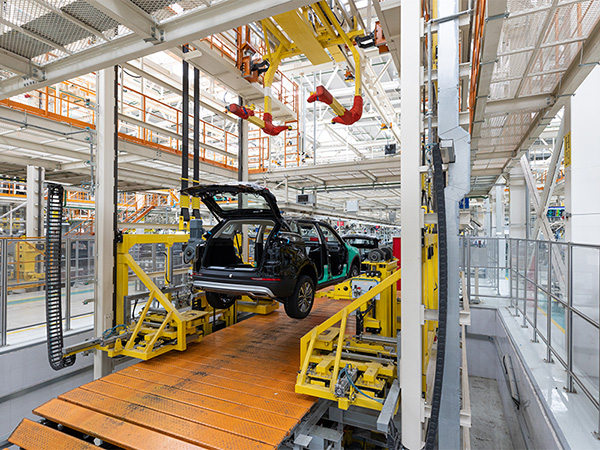 Complex manufacturing environments (aerospace, automotive, chemical processing, semiconductor fabrication, heavy industry) combine multi-layered technical systems in which human factors, materials, equipment and process variables interact in ways that compound risk. A conventional safety checklist rarely captures that interaction. This guide consolidates the principal categories of engineering risk in complex manufacturing, summarises the frameworks that international bodies such as ISO, IEC and OSHA have established to address them, and signposts the peer-reviewed research that underpins current best practice.
Process variability and statistical failure modes
One of the most extensively studied categories of manufacturing risk is process variability: deviations from nominal operating parameters that propagate into product defects or system failures. Statistical Process Control (SPC), codified under ISO 7870, establishes that processes operating near their control limits are inherently vulnerable to assignable-cause variation. This is especially pronounced where tolerances are tight, as in precision machining and microelectronics fabrication.
Research in reliability engineering shows that mean time between failures (MTBF) decreases non-linearly when multiple sub-processes operate simultaneously near their performance limits. The effect is most visible in continuous manufacturing lines, where downstream processes amplify the variability they inherit from upstream (IEEE Std 493; Moubray, Reliability-Centred Maintenance).
Key standards: ISO 7870 (Statistical Process Control) · IEEE Std 493 (Reliable Industrial & Commercial Power Systems) |
Human factors and cognitive failure in manufacturing
 ANSI/HFES 100 and ISO 9241 (Ergonomics of Human-System Interaction) identify human error as a primary contributor to manufacturing incidents. Cognitive overload, unclear procedures and shift-change communication failures are documented causes of critical process deviations in high-complexity environments.
The Swiss Cheese Model. James Reason's seminal work (Human Error, Cambridge University Press, 1990) - widely adopted in industrial safety frameworks including IEC 61511 - demonstrates how latent failures (organisational and design deficiencies invisible during normal operations) align with active human errors to produce loss-of-control events. The pattern is particularly prevalent in chemical and petrochemical processing environments.
Key standards: ISO 9241 (Ergonomics of Human-System Interaction) · IEC 61511 (Functional Safety for the Process Industry) · ANSI/HFES 100 |
Equipment degradation and maintenance risk
ISO 55000 (Asset Management) and EN 13306 (Maintenance Terminology) frame equipment degradation as a probabilistic risk requiring structured lifecycle management. Multi-mode failure is a recognised hazard in complex manufacturing: equipment can fail through corrosion, fatigue, thermal cycling or tribological wear, often simultaneously, making prediction unreliable without condition-monitoring systems.
Studies published in the Journal of Manufacturing Science and Engineering confirm that predictive maintenance gaps correlate with catastrophic failures in high-speed rotating equipment, hydraulic systems and automated tooling. The consequences extend well beyond the equipment itself: process chain disruption, safety incidents and product contamination all follow.
Key standards: ISO 55000 (Asset Management) · EN 13306 (Maintenance Terminology) · IEC 60300 (Dependability Management) |
Thermal and chemical process hazards
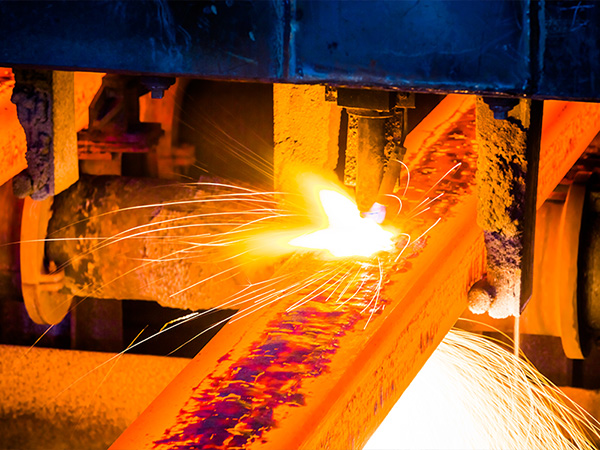 In industries involving elevated temperatures, reactive chemistry or pressurised systems, runaway reactions and thermal excursions are among the most severe engineering risks. The CCPS Guidelines for Chemical Reactivity Evaluation and IEC 60079 (Explosive Atmospheres) provide the normative basis for evaluating these hazards.
Incident analyses from the U.S. Chemical Safety Board (CSB) and the French ARIA database consistently identify insufficient heat transfer management, incompatible material storage and inadequate relief-system sizing as proximal causes of major accidents. The 2005 Texas City refinery disaster remains a canonical illustration of how even brief operation outside safe limits can trigger cascading failures.
Key standards: IEC 60079 (Explosive Atmospheres) · CCPS Guidelines for Chemical Reactivity · API RP 520/521 |
Supply chain and materials integrity risk
Incoming material integrity is a risk multiplier in complex manufacturing. ISO 9001:2015 requires supplier qualification and incoming inspection, yet research documents that material substitution, specification drift and counterfeit components introduce failure modes that are difficult to detect until late in the production cycle - or, critically, in service (Sodhi & Tang, Managing Supply Chain Risk, Springer).
In aerospace and medical device manufacturing, governed by AS9100 and ISO 13485 respectively, traceability failures compound materials risk by preventing root-cause isolation when defects emerge. That increases both safety exposure and regulatory liability.
Key standards: ISO 9001:2015 (Quality Management) · AS9100 (Aerospace QMS) · ISO 13485 (Medical Devices QMS) |
Cybersecurity risk in digitally integrated manufacturing
 As manufacturing processes integrate Industrial Control Systems (ICS), SCADA and IoT-connected instrumentation, cybersecurity has entered the engineering risk register. IEC 62443 and NIST SP 800-82 define frameworks for managing these risks - which now include unauthorised process modification, ransomware-induced shutdowns and sensor-data manipulation.
Research in the International Journal of Critical Infrastructure Protection demonstrates that ICS vulnerabilities in manufacturing are increasingly being exploited, with the potential for physical process disruption that traditional engineering risk assessments did not historically anticipate.
Key standards: IEC 62443 (Industrial Automation & Control Systems Security) · NIST SP 800-82 (ICS Security Guide) |
Risk integration frameworks: ISO 31000, IEC 61508, FMEA and Bow-Tie
The engineering community has developed several overarching frameworks for managing multi-domain risks in an integrated manner:
- ISO 31000 (Risk Management) - the generic process framework for risk identification, analysis, evaluation, treatment and monitoring, applicable across all manufacturing sectors.
- IEC 61508 (Functional Safety) - establishes the Safety Integrity Level (SIL) methodology, quantifying tolerable risk levels and the reliability requirements of the safety systems needed to achieve them.
- FMEA (IEC 60812 / AIAG-VDA) - Failure Mode and Effects Analysis remains the most widely applied technique for systematically identifying failure modes at component and system level before they manifest.
- Bow-Tie Analysis (Energy Institute) - maps causal pathways from hazard to loss event, identifying both preventive and mitigative barriers. Widely adopted in oil & gas, chemical and nuclear industries.
Summary: risk categories and governing standards
The table below consolidates the primary risk categories identified in this guide with their associated hazards and governing international standards.
Risk category | Primary hazard | Key standard(s) |
|---|---|---|
Process variability | Defects from parameter deviation | ISO 7870; IEEE Std 493 |
Human factors | Cognitive overload; procedural error | ISO 9241; IEC 61511; ANSI/HFES 100 |
Equipment degradation | Multi-mode failure; maintenance gaps | ISO 55000; EN 13306; IEC 60300 |
Thermal / chemical | Runaway reactions; thermal excursion | IEC 60079; CCPS Guidelines; API 520 |
Supply chain | Counterfeit materials; traceability gaps | ISO 9001; AS9100; ISO 13485 |
Cybersecurity | ICS compromise; SCADA manipulation | IEC 62443; NIST SP 800-82 |
Integrated risk management | Unmitigated multi-domain risk interaction | ISO 31000; IEC 61508; IEC 60812 |
Key takeaways for managing engineering risk in complex manufacturing
Engineering risks in complex manufacturing are rarely singular or isolated. They emerge from the interaction of physical, human, organisational and digital factors across the full lifecycle of a process. The scientific literature and international standards converge on four practical conclusions:
- Risk is dynamic. It must be monitored continuously, not assessed once at project inception.
- Human factors persist. They represent a vulnerability that engineering controls alone cannot eliminate.
- Quantitative methods are essential. FMEA, SIL analysis and SPC provide the rigour needed to prioritise risk treatment effectively.
- Integration is required. Effective risk governance must span engineering, operations, maintenance and management functions.
Sustained compliance with the applicable standards - ISO 31000, IEC 61508/61511, ISO 9001, ISO 55000, IEC 62443 and sector-specific derivatives - combined with a culture of safety and continuous improvement, constitutes the current best-practice foundation for managing engineering risk in complex manufacturing.
Frequently asked questions
What is engineering risk assessment in manufacturing?
Engineering risk assessment is the structured process of identifying, analysing, evaluating and treating the technical hazards associated with a manufacturing process. In complex environments it typically covers process variability, equipment reliability, human factors, thermal and chemical hazards, supply chain integrity and cybersecurity - and is usually anchored in frameworks such as ISO 31000 and IEC 61508.
Which international standards apply to manufacturing risk management?
The core standards are ISO 31000 (risk management principles), IEC 61508 and IEC 61511 (functional safety), ISO 9001 (quality management), ISO 55000 (asset management) and IEC 62443 (industrial cybersecurity). Sector-specific overlays include AS9100 for aerospace and ISO 13485 for medical devices.
Why is a checklist not enough for complex manufacturing?
Checklists capture known, static hazards. They do not capture interactions between hazards - latent organisational failures aligning with active human error, for example, or cyber vulnerabilities enabling a physical process excursion. Quantitative techniques (FMEA, SIL, Bow-Tie) combined with continuous monitoring are required for complex, interacting risks.
How often should a manufacturing risk assessment be reviewed?
Practice varies by sector, but ISO 31000 treats risk assessment as a continuous activity. Major reviews are typically triggered by process change, incident, significant supplier change, new regulation or updated cyber-threat intelligence - not by the calendar alone.
Looking for specialist engineering risk assessment?
CEERISK conducts engineering risk surveys and assessments across heavy industry, oil & gas, renewable energy, pharmaceuticals and critical infrastructure in more than 60 countries. If you would like to discuss how the frameworks in this guide apply to your operations — or arrange a tailored risk survey, please get in touch with our team.

Key references
- ISO 31000:2018 - Risk Management Guidelines
- IEC 61508:2010 - Functional Safety of E/E/PE Safety-Related Systems
- IEC 61511:2016 - Functional Safety: Safety Instrumented Systems (Process Industry)
- IEC 62443 - Industrial Automation and Control Systems Security
- ISO 9001:2015 - Quality Management Systems
- ISO 55000:2014 - Asset Management
- ISO 7870 - Control Charts (Statistical Process Control)
- IEC 60812 - Failure Mode and Effects Analysis (FMEA)
- IEC 60079 - Explosive Atmospheres
- NIST SP 800-82 - Guide to Industrial Control Systems Security
- CCPS - Guidelines for Chemical Reactivity Evaluation and Application to Process Design
- IEEE Std 493 - Recommended Practice for the Design of Reliable Industrial and Commercial Power Systems
- Reason, J. (1990) Human Error. Cambridge University Press
- Moubray, J. (1997) Reliability-Centred Maintenance (2nd ed.). Butterworth-Heinemann
- Sodhi, M.S. & Tang, C.S. (2012) Managing Supply Chain Risk. Springer
- U.S. Chemical Safety Board - Investigation Reports (various years)
- ARIA Database - French Ministry of Ecological Transition - Industrial Accident Reports